Why natives, and why here
The Peninsula has a Mediterranean climate: rain from November to April, then months of almost no water at all. Most of the world’s garden plants come from places with summer rain, which is why they need constant irrigation here. California natives evolved with the opposite pattern. Once established, most of them want a wet winter and a dry summer — the exact conditions a Peninsula garden already provides.
There is a second argument, and it is the one the club has been making since 1968: a native garden is habitat. Local insects, birds and pollinators evolved alongside these plants. A bed of ceanothus in flower is louder with bees than anything else on the street.
The garden behind the Woodside Library is a working demonstration of both points. It is not a wild garden and it is not a museum of rarities; it is a planted landscape that has been maintained by volunteers for more than half a century.
Four conditions
The same plant will not grow in all four places
The library garden is divided by condition rather than by fashion: deep shade, dry woodland, hot sun with fast drainage, and cool coastal air. Match the plant to the condition and most of the work disappears.
| Plant | Common name | Where it belongs | Why it earns its place |
|---|---|---|---|
| Sequoia sempervirens | Coast redwood | Redwood grove | The canopy tree of the shaded slope; its litter builds the soil beneath. |
| Polystichum munitum | Western sword fern | Redwood grove | Evergreen structure in full shade; tolerates dry summers once settled. |
| Asarum caudatum | Wild ginger | Redwood grove | Groundcover for damp shade under trees. |
| Quercus agrifolia | Coast live oak | Oak woodland | The defining tree of the Peninsula; needs no summer water and no feeding. |
| Heteromeles arbutifolia | Toyon | Oak woodland, chaparral | Red winter berries, white spring flowers, and birds through the cold months. |
| Symphoricarpos mollis | Creeping snowberry | Oak woodland | Informal groundcover under oaks where little else will take the root competition. |
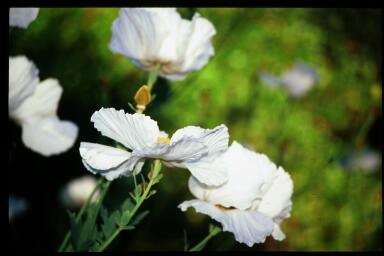
| Romneya coulteri | Matilija poppy | Chaparral | Eight feet tall, white crinkled flowers; wants sun and sharp drainage, spreads by root. |
| Ceanothus species | California lilac | Chaparral | Blue flowering shrubs in spring and one of the best pollinator plants available. |
| Arctostaphylos species | Manzanita | Chaparral | Evergreen leaves, sculptural bark, and complete indifference to summer drought. |
| Salvia clevelandii | Cleveland sage | Chaparral | Fragrant grey foliage and violet flowers in early summer. |
| Eriogonum fasciculatum | California buckwheat | Chaparral | Long summer bloom, dry-tolerant, and a magnet for small pollinators. |
| Iris douglasiana | Douglas iris | Coastal, woodland edges | Tough evergreen iris for the transition between shade and sun. |
| Erigeron glaucus | Seaside daisy | Coastal | Low, grey-leaved and free flowering where the fog rolls in. |
| Dudleya species | Live-forever | Coastal | Succulent rosettes for the sharpest drainage and the thinnest soil. |
| Festuca species | Fescue grasses | Chaparral, coastal | Fine texture between shrubs; holds soil and moves in the wind. |
Growing natives: what actually matters
Most native plants that fail in gardens fail for one of four reasons. None of them is complicated to avoid.
Plant in autumn, not spring
A native planted in November has five months of rain to establish roots before its first dry summer. The same plant set out in April needs irrigation through its most vulnerable months. Autumn planting is the single biggest difference between success and disappointment.
Then stop watering
Summer water is what kills most chaparral plants. Ceanothus, manzanita and Matilija poppy evolved with bone-dry summers; regular irrigation in July invites root rot. Water generously through the first one or two summers, then taper off and let the plant fend for itself. Shade plants from the redwood belt are the exception and will take some summer water.
Skip the fertiliser
California soils are lean and that suits these plants. Feeding them produces soft, floppy growth that lives short and breaks in wind. Compost as mulch is usually all the nutrition a native planting needs.
Get the drainage right
On heavy clay, plant on a slight mound and keep mulch away from the crown of the plant. Water sitting around the base through winter is the other common cause of loss.
A word about deer
There is no such thing as a deer-proof plant, only plants deer are less likely to eat. Aromatic, grey-leaved and tough-textured natives — sages, buckwheat, manzanita, most ceanothus — tend to be left alone. Tender new growth on anything is vulnerable, and a hungry deer in a dry September will try almost anything once.
See them growing, not just listed
A plant list is a poor substitute for a walk. The Woodside Library Native Plant Garden is open to the public, every specimen is labeled with its botanical and common name, and the library keeps a reference book with photographs for anyone who wants to identify something.