
How the garden began
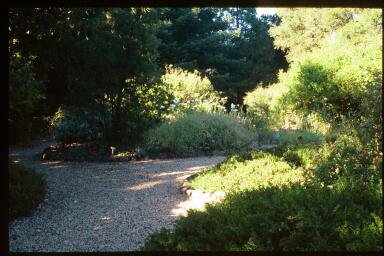
When the Woodside Library was built in 1968, the county announced that the sloping land behind it would be fenced off. Talented members of the Woodside-Atherton Garden Club had a better idea — and with vision and hard work they created the Woodside Library Native Plant Garden instead.
More than half a century later the garden is still a working example of what California natives can do in a suburban setting. Members prune, weed and replant it; local landscapers donate their time for heavy landscape work and for high tree pruning.
Four planting areas
The garden is not one planting but several, each matching a different set of conditions found on the slope. Walking through, you move from deep shade to full sun in a couple of minutes.
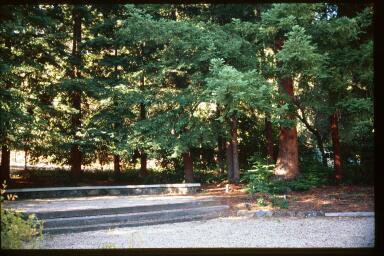
Redwood grove
Deep shade, acid litter and steady moisture — the conditions coast redwoods create for themselves. Underplanting here is about ferns, wild ginger and shade-tolerant groundcovers.
Oak woodland
Dappled light under coast live oaks, with leaf litter and dry summers. Plants here tolerate root competition and little summer water.
Sunny chaparral
Full sun and fast drainage, for plants that need a wet winter and a completely dry summer. This is where the showiest flowering natives sit.
Coastal section
A small bed for species from the fog belt, where salt air and cool summers shape what will grow.
Plant profile
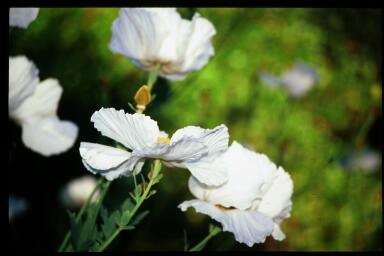
Romneya coulteri, the Matilija poppy
The Matilija poppy grows to about eight feet, with grey-green leaves and enormous white, crinkled petals around a centre of bright yellow stamens. It is native to southern California, where it is found inland along the coast in dry washes and canyons below 4,000 feet, often among chaparral.
Thomas Coulter (1793–1843) led an adventurous life that took him from Ireland to Geneva, to Mexico and the United States. His medical studies and natural curiosity found an outlet in plant collecting. In 1825 Coulter walked across a hundred miles of California desert to become the first botanist to collect in Arizona; along the way he found the Matilija poppy growing along the San Luis River.
“As the next greatest respect that I can pay to Dr. Coulter’s memory, to bestow upon this fine plant of his discovery the name of his most distinguished and one of his most intimate friends, I inscribe it to Rev. T. Romney Robinson, the Astronomer of Armagh.” The British botanist who named Romneya coulteri
And so the genus honours Robinson rather than its discoverer, while the species name keeps Coulter’s.
A living classroom
Labels, a reference book, and school groups
Every specimen in the garden carries a label with its botanical and common name, and the library keeps a book with photographs and further information for anyone who wants to know more.
Almost any time of year the space becomes an outdoor classroom. It attracts schoolchildren, college landscape-design classes, and gardeners from around the country who come to see the native flora of California.
The club’s popular plant sale takes place in the garden in conjunction with the library’s annual April book sale — the best moment in the year to see the garden full of people.
Source note
Plant history in the Matilija poppy profile is condensed from the Yosemite Association publication A Wild Flower by any other Name — Sketches of pioneer naturalists who named our western plants by Karen B. Nilsson.